
Osteopathy in the Cranial Field (OCF)
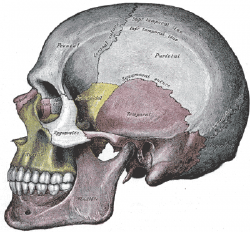
Dr A.T. Still (or Dr. Andrew Taylor Still), the founder of Osteopathy, felt that the cerebrospinal fluid contained the highest known elements found in the body, and advised one of his early female students, Charlotte Weaver, to continue the science of Osteopathy into the cranial realm. She did exhaustive studies on endocrinology and did radiologic studies to investigate the effects of birth trauma on the bones of the cranial base in the early 1900’s. Unfortunately, her studies were lost, and there are very few of her writings describing any of the techniques she developed to work on the congenital deformities that she noted on X-rays. Later in the early 1900’s another of Still’s students, William Sutherland, while a student at what is now the Kirksville College of Osteopathy, was intrigued by an anatomic specimen in a display case. This Hallady Skull was created by putting a skull in water containing dried legumes that swelled and forced the bones of the skull to separate at the serrated joints between adjacent bones that are called sutures, or cranial sutures. The separated skull bones were mounted in such a way that the sutures were separated by a few millimeters, which highlighted the sutural relationships between the adjacent bones. Sutherland looked at the squamous suture between the temporal and parietal bones and noted that it appeared to have serrations that made it look like the gills of a fish, and he theorized that it represented something possible related to respiration in a truly novel way. Years of study, including experimenting on his own skull using a catcher’s mitt and a C clamp, ensued before he developed Cranial Manipulation, which is now called OCF. He systematically began teaching this novel manipulative approach in the late forties and fifties. Sutherland theorized that the rhythmic fluctuation of cerebrospinal fluid, the effects of which could be palpated throughout the body, represented a form of Primary Respiration distinct from thoracic respiration.
Far more well-known is something called Craniosacral Therapy (CST), a name trade marked by John Upledger, D.O. in the 1980’s. Dr. Upledger claimed that he discovered the rhythmic flow of cerebrospinal while assisting in a neurosurgical procedure performed on one of his patients. Although Dr. Upledger was a charismatic and excellent teacher, this scenario was not true. Upledger was trained in Cranial Manipulation by faculty while he was a student at Kirksville College Osteopathic Medicine and knew about the fluctuation of cerebrospinal fluid before his ‘AHA’ moment during surgery. Although there are some excellent CST practitioners, anyone with the money, regardless of their training or background, can take a weekend seminar and put CST practitioner on a business card. DO’s who specialize in OCF have generally taken several hundred hours of training to gain the necessary skills.
OCF is a very useful tool for the treatment of many conditions including headaches, back and neck pain, sinus and allergy issues, closed head injuries, some aspects of strokes, TMJ, some aspects of malocclusion (bad dental bite), plagiocephaly (congenital misshapen head), neonatal reflux, poor suck/nursing issues, tinnitus in some cases, and various other conditions, including anxiety and other autonomic nervous system issues. The techniques that are utilized generally consist of light touch and are not limited to the cranium, since the effect of the fluctuation of cerebrospinal fluid can be palpated throughout the body. This rhythmic fluctuation is referred to as the cranial rhythmic impulse (CRI) and can be used as a screening tool throughout the body to see where there is a dysfunctional area as represented by a diminished or absent CRI.
Neonatal gastroesophageal reflux or nursing issues such as poor latch or suck is a good example of how OCF can be utilized. In some cases of labor, the baby descends the birth canal with its face upwards toward the sky, rather than the normal manner facing the ground. These “star gazers” can have the base (lower back portion) of their skulls compressed with uterine contractions against the mother’s sacrum and coccyx which are rigid compared to the pubic bones that separate by up to 4 inches during uterine contractions. If the baby is facing downward toward the floor, the delicate basilar portion of the skull is relieved of pressure by the separation of the pubic bones. There are 2 important holes at the base of the skull on each side, the jugular foramina. Within the jugular foramen are 3 cranial nerves (IX, X, XI) and the internal jugular vein. The IXth and XIth cranial nerves can affect latch on and swallowing, as well as reflux. The Xth cranial nerve, the Vagus, is the most important nerve in the Parasympathetic Nervous System, and can cause GI issues like reflux, as well as insomnia, and generally poor feeding issues. The internal jugular vein is one of the main ways that blood leaves the brain and can be the cause of headaches in adults or children that are worse upon awakening because when sleeping this vein drains blood from the brain. Clearly, OCF is useful in all ages of patients, but can be especially useful for newborns and younger children.
Steps to Get Started
Download New Patient Form
Complete the form at home to save time and help us better understand your needs.
Schedule an Appointment
Call or email us to book a time that works best for you.
Visit the Center
Come in for your first visit and begin your journey toward better health with Dr. Kavieff.
Client Testimonials
When he works on me his hands are really warm and like magic. He never hurts me and I feel so much better after. He is super nice and when I was little I wasn’t afraid of him like some other doctors.
Robert S.
In 1996 I was diagnosed with a herniated disc in my neck and lower back. Traditional medical doctors advised me to stop all physical activity and warned If I continued, I would end up in a wheelchair! After seeing Dr. Kavieff, not only am I completely out of pain, I am extremely healthy and more active than I was 10 years ago. Dr. Kavieff has completely transformed my life and added great value and significance. I am still a patient today and I am forever grateful!
Sue Hummel
Special Education Teacher